


If there’s a setting that requires great value, but highly durable furniture, it’s a community centre. However, as diverse, multi-use spaces it can often be a challenge knowing what types of furniture will work best. If that’s a problem you’re currently facing, then keep reading, and we’ll tell you everything you need to know about buying furniture for a community centre…
What do we mean by the term ‘community centre’?
These days, particularly given the spate of community asset transfers that have occurred over the past decade, there are many different types of community centres.
Here at Rosehill, we define a community centre as being any type of building that is visited and used by the entirety (or most) of the local community. As such, any of the following buildings can be technically classed as a ‘community centre’:
- Village halls.
- Church halls.
- Town halls.
- Civic halls.
- British Legions.
- Working men’s clubs.
- Local sports clubs.
- Labour clubs, Conservative clubs, Liberal clubs.
- Reading rooms.
- Trades union hubs.
- Community resource centres.
- Community offices.
These are just a few of the different buildings that are often grouped together under the term ‘community centre’.
However, regardless of the type of building, you’ll find that there are some common types of furniture – and furniture characteristics – you should look for when buying furniture for a community centre. And, that’s what we’ll be looking at next…
Top tips for buying furniture for a community centre
Okay, so you’ve been tasked with buying new furniture for your community centre. Where do you start?! Well, to help, the Rosehill team has compiled their top tips below which should help you select the right furniture, in the right way, at the right price for your building.
Think about the use of your building and its spaces
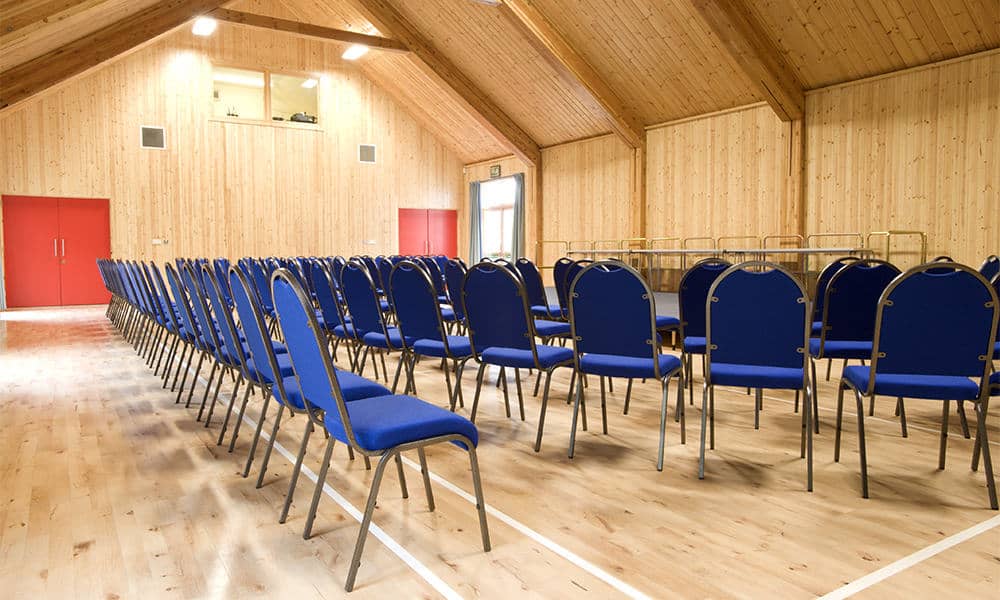
If you’re only going to remember one part of this article, then make it this part. In order to buy furniture that’ll work for your building and its users – and ensure you get value for money – then you need to think about the ways in which your building and its spaces are used.
The easiest way to do this is to draw up a list of the groups that regularly use your centre – and what they do whilst they are there.
For example, a typical community centre may have the following groups use it throughout the week:
- Older people’s social club – involving gentle seated activities and dining.
- Mums ‘n’ tots groups – parents and toddlers (and babies) involved in play.
- Scout/youth groups – children and young teens involved in activities and energetic play.
- Support groups – seated group discussions.
- Party hire – for weddings, birthdays or other celebrations with users seated around tables. The tables are then moved or stacked away to clear a dance area.
- Concerts or performances – with seating arranged in rows, usually linked or fastened together for safety regulations.
That’s not a comprehensive list, but it gives you an idea of the variety of groups and activities that can take place within a community centre.
Once you’ve established who uses your community centre – and how – you should then give some thought to the properties that you’ll need your furniture to have.
For example, if your centre is regularly used by youth groups, then you’re going to want very durable furniture. Likewise, if your centre is regularly used by Mums n Tots groups or older people’s groups, you’re going to want furniture that can be easily cleaned in the event of accidents etc.
This is the most important point to bear in mind when buying community centre furniture. Ultimately, the furniture you choose should be determined by who will be using it, and the way in which they will be using it.
Are you buying the furniture with grant funding?
Many community centres are dependent on a variety of grant funding from charitable foundations, the National Lottery, philanthropists and other sources.
Which brings us to another important point. If you’re intending to use grant funding to purchase furniture for your community centre – then it’s important to work with a furniture supplier that can provide you with a written quote for the cost of the furniture.
This is because the majority of grant funders will require a written quote before they are able to provide funding for the purchase of furniture.
Here at Rosehill, we are able to provide detailed written quotes for any of our items of furniture. If you’d like Rosehill to create a written quote for you then please send an email to sales@rosehill.co.uk with the following information:
- The items of furniture you require (including the quantities of each item, the finishes and any optional extras you’d like).
- Your contact details and full delivery address.
Once you have provided us with this information, a member of the Rosehill team will send you your quote within one to two business days. If we have any queries, we will telephone you.
Note – here at Rosehill we are unable to assist with funding applications as this falls outside of the scope of our expertise.
Safety and standards
In addition to thinking about the characteristics of your chosen furniture (durability, ease of cleaning etc), it’s very important that you also know what standards your chosen furniture must meet.
For example, if you are buying upholstered chairs they will need to be upholstered with a fabric that is suitable for the level of fire risk within your community centre.
To expand on this point, consider the following scenario. You want to buy some new upholstered lounge chairs for the social area of your community centre. In the ‘lowest risk’ cases, you’ll need a chair that is upholstered in a fabric which meets the standards of BS EN 1021:1 2006 (smouldering cigarette), and BS EN 1021:2 2006 (match flame).
However, if you are buying upholstered chairs for the social area of your community centre, where there is a bar that serves alcohol, then this will be classed as a higher risk environment. In this case, you’ll need to buy a chair which is upholstered in a fabric which meets the following standards: BS EN 1021:1 2006 (smouldering cigarette), BS EN 1021:2 2006 (match flame), and BS 5852:2006 Sect 4 IS5 (Crib 5).
As you can see, there are many important fire safety considerations to take into account when buying community centre furniture.
If you’d like more information on this topic, Rosehill recently created one of the contract furniture industry’s most comprehensive guides on the topic. Read ‘What Fire Safety Regulations Apply to Contract Furniture?’ for more.
Aside from fire safety standards, there are also some durability and dimension standards that it pays to be aware of. You can find out more about these standards in our guide – ‘A Guide to Contract Furniture Strength & Weight Testing Standards’.
Bulk purchase deals
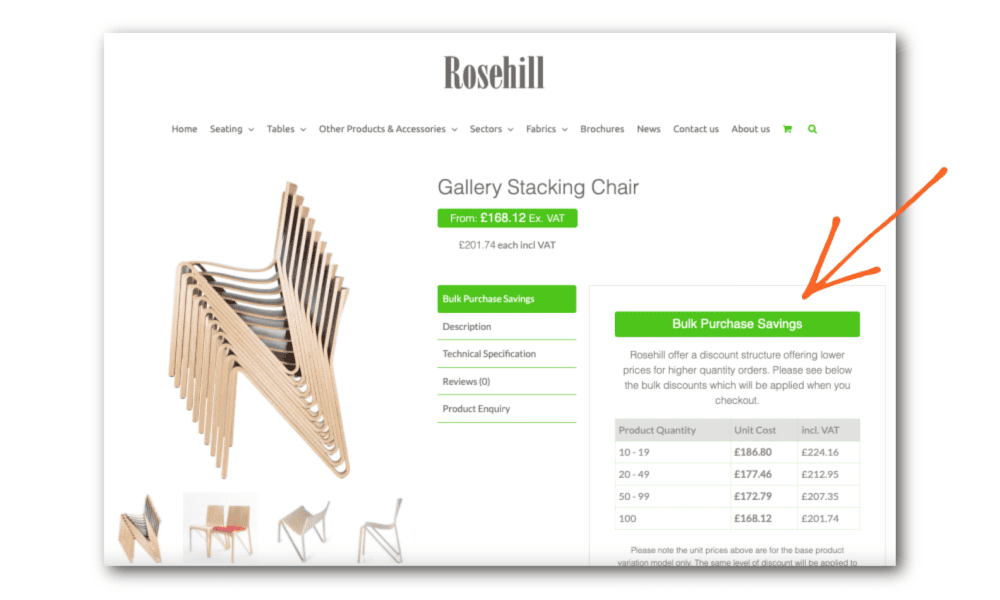
The average community centre isn’t awash with cash, which makes it all the more important that you choose furniture from suppliers that are able to offer good, competitive bulk buying discounts.
Here at Rosehill, we’ve developed – and sustained – relationships with the UK and Europe’s leading contract furniture manufacturers for over 40 years.
For that reason, we are able to offer bulk buying discounts that you simply can’t get anywhere else.
In most cases, the more you buy, the cheaper the cost per item. You can view our available bulk buying discounts within the product description (see the image below for example):
Having said that, if you have a particular product in mind, or are working to a particular budget, contact us, and we are happy to look at additional discounts for you, where possible.
Storage
As the majority of community centres are multi-use spaces, you’re going to want to buy items of furniture which can be easily and conveniently stacked, folded and stored away.
So, think about purchasing stacking chairs and folding tables. These will provide you with far more flexibility and storage options than traditional fixed leg options.
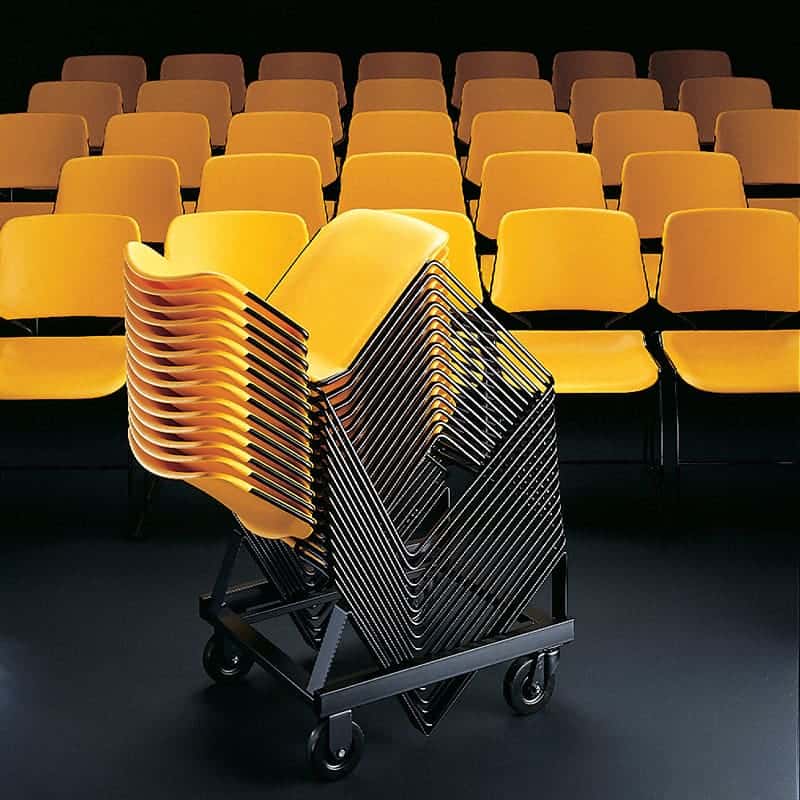
It’s also worth thinking about the degree to which your furniture can be stacked. By selecting chairs which can be stacked particularly high (e.g. 60 high on a trolley), and tables which can be stacked or nestled densely, you’ll free up more space for activities in your community centre. This is especially important if you are looking to maximise the capacity (and thus revenue) of your space.
Being able to safely store your furniture might be a consideration for the building’s health and safety when renting out your space too. For example, you’d want any stacks or trolleys of furniture somewhere safe and secure if there is a highly active dance class that is using the main hall space.
Hygiene
As community centres tend to be used by a large number of people throughout the week, it’s wise to purchase items of furniture that are easy to clean and maintain.
Think back to our point earlier about the users of your premises, and you’ll understand that having hygienic, easy-to-clean furniture is especially important if your centre is used by either the very young or very old.
When it comes to selecting hygienic furniture, there are two main things to consider:
- The design of the furniture – does the shape/design of the furniture make it easy to clean? Does it feature ‘hygiene gaps’?
- The furniture’s material – are the materials used in the furniture’s construction favourable to hygiene? For example, are the materials wipe-clean or washable?
Take these points into consideration, and you’ll ensure that you end up with furniture that supports good hygiene in your centre.
Weight
Another important thing to consider when selecting furniture for a community centre is how heavy it is.
Think back to our original point above; who will be using your community centre?
If there are going to be older people moving furniture around, then you’re going to want lighter chairs and tables. For example, a lightweight chair will be about 5 kg, whilst a lightweight folding table will be about 14 kg.
It can also be worth considering buying items of furniture with castor wheels to make moving them even easier.
Bear in mind that in some cases, people may end up moving furniture on their own (for example, if an individual is responsible for running a support group and arrives before the attendees to set up). In this situation, it can be useful to have items of furniture with features such as integrated carry handles, easy-to-use folding mechanisms, grippable surfaces etc as well as compatible trolleys.
Colours
This may seem like an unusual characteristic to think about, but the colour of your chosen furniture matters.
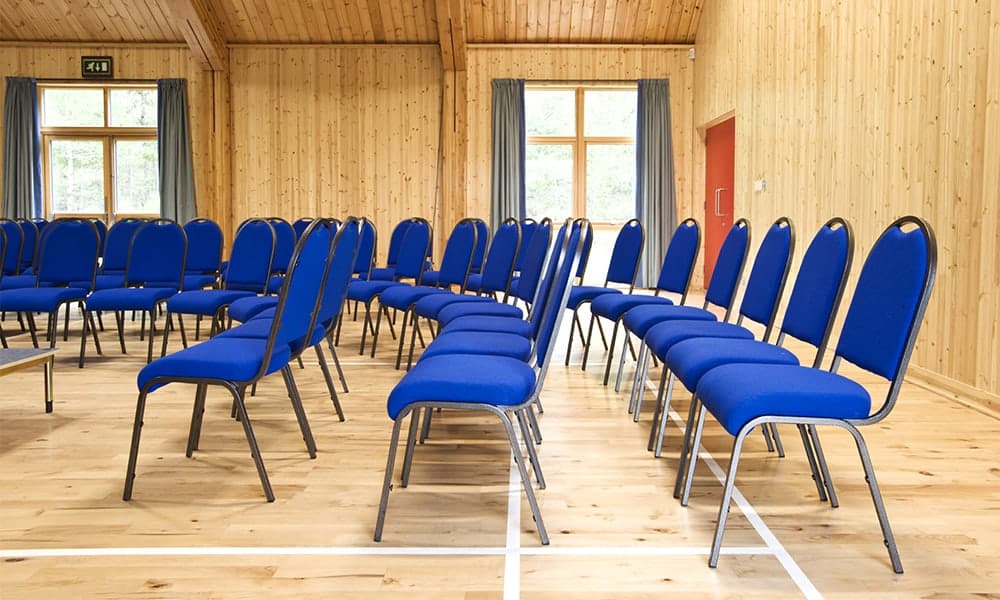
If you intend to hire out spaces within your building, then you’ll want to select colours that are fairly neutral and can work around multiple colour schemes, for different users renting the space. Should you select colours that are too bold, this may prove to be off-putting to certain people.
Likewise, if you’re thinking about renting space for functions/wedding receptions etc, you may want to select chairs which are compatible with chair covers.
What furniture do you need for a community centre?
Okay, so we’ve examined the different characteristics you should look for when buying community centre furniture. But, what actual items of furniture should you be buying? Below, we’ve outlined the key items of furniture that you’ll typically need for each part of your community centre.
Main hall
If a community centre is the heart of a community, then the main hall is the heart of a community centre.
Put another way, the main hall is typically the most important room within a community centre as it’s where all the main activities and meetings take place.
So, what sort of furniture should you be buying for your main hall? In general, you’ll find that these items of furniture are most suitable:
- Stackable chairs – if you’re short on space, then be sure to select high-density stacking chairs.
- Folding chairs – if you prefer, you can select folding chairs; however, in recent years, stacking chairs have become the ‘go to’ option.
- Folding tables – folding tables are generally the best option for the main space within a community centre. The best folding tables are lightweight, affordable and long-lasting.
- Staging – should your community centre regularly host events, then it’s important that you have some good-quality staging in your main hall. For many community centres, portable staging is the most flexible option.
Reception area
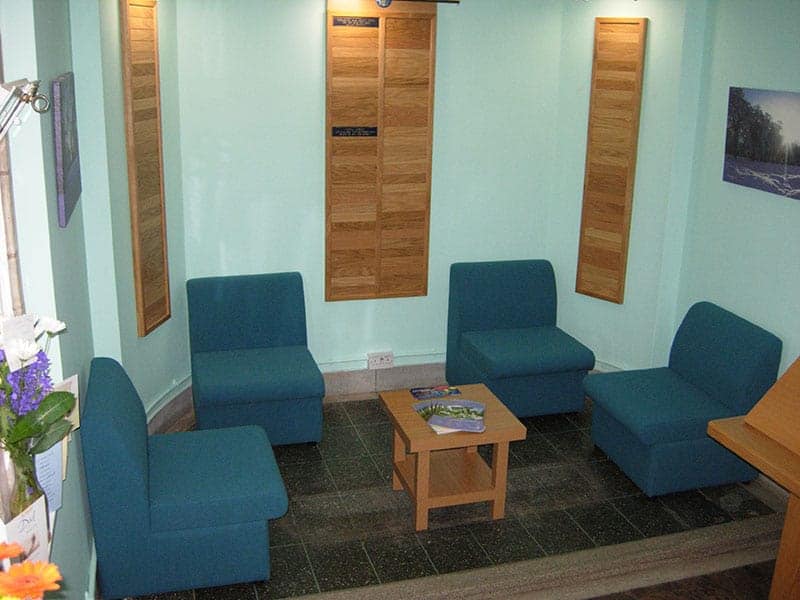
Does your community centre have a reception area? Then it’s a good idea to buy some reception-specific furniture to create a comfortable and welcoming atmosphere.
The types of furniture that’ll be suitable for a community centre reception include:
- Modular reception seating – which can be connected together to create larger seating arrangements.
- Reception desk – to provide somewhere for a receptionist to sit, or to place signing in books etc.
- Noticeboards – to display promotional literature, updates etc.
Children’s areas
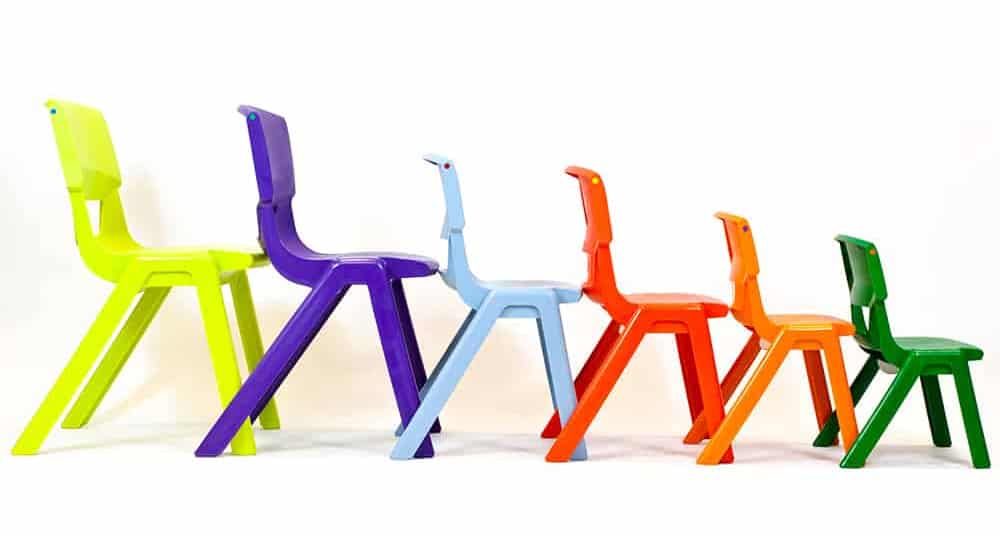
Should you have dedicated children’s areas within your community centre – or regularly have children’s and toddler’s groups in the main hall – then it’s certainly worthwhile investing in dedicated children’s furniture.
The types of children’s furniture you should consider include:
- Children’s chairs – chairs such as the Postura+ are available in a range of child-specific sizes and are hardy, durable and easy-to-clean.
- Children’s tables – it’s possible to buy a range of classroom style tables that are sized for use by young children. Metalliform’s Circular & Semi-Circular School Tables are a great example.
Quiet spaces
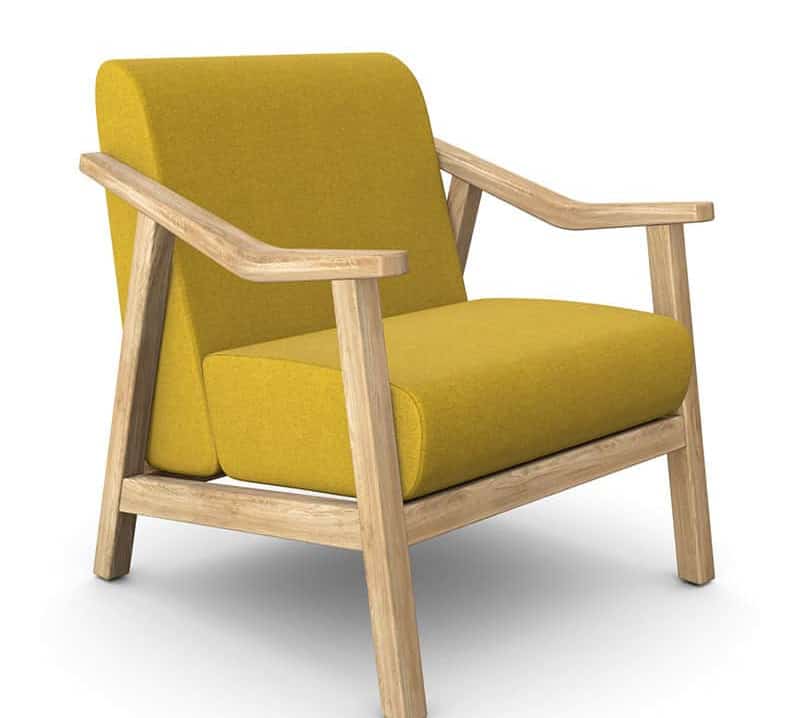
Do you have areas in your community centre where people can sit quietly and reflect? Perhaps you have some counselling areas or ‘chill out zones’? If that’s the case, then there are some specific items of furniture that you’ll want to buy. These include:
- Lounge chairs – create a relaxing environment by selecting lounge chairs. The best lounge chairs are typically richly upholstered with wooden frames. They typically include armrests, too. A good example of this type of lounge chair is the GoGo Lounge Chair.
- Coffee tables – a good coffee table will give users of your quiet space somewhere to put their drinks. Coffee tables are also a handy way of storing and displaying literature such as information pamphlets etc. A good example of a coffee table is the Strut Coffee Table, which is available in two heights which can be nested together.
Café/dining areas
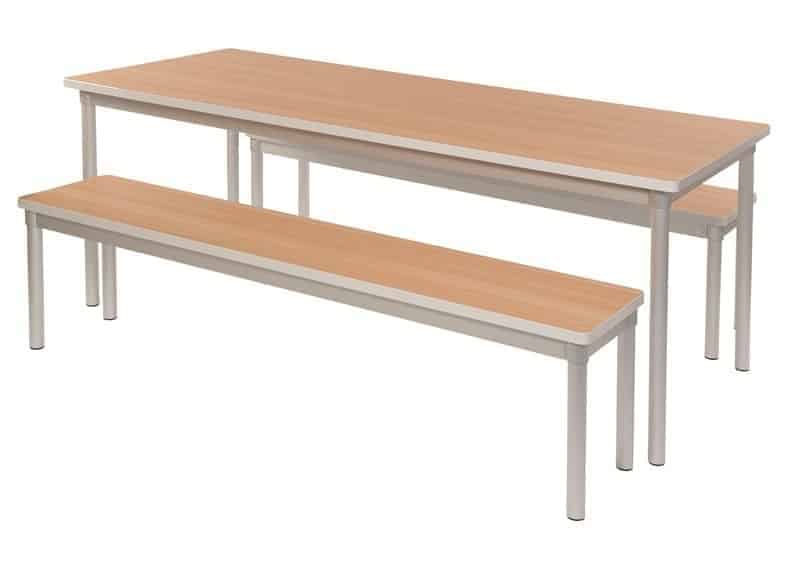
Many community centres feature a café or dining area – not merely to serve a useful function for the local community – but also as an additional revenue stream.
If you have a dedicated café or dining area in your community centre, then you’ll want to consider buying the following items of furniture:
- Canteen tables – these are ‘all-in-one’ tables that include integrated seating. They’re ideal for busy cafés and dining areas. A great example is the Hille Apero Canteen Seating.
- Pedestal tables – if you only have a small dining area in your centre, then you may find that pedestal tables are a better option. They also provide a more café type feel than canteen tables. Our Forza Pedestal Tables are a great choice for community centres.
- Café chairs – alternatively, you may want to consider purchasing individual chairs for your community café. Look for easy-to-clean, durable chairs such as the Plyform Café Chair.
- Dining tables – if you want individual tables for your café, then consider dining tables that feature robust, durable table-tops. Something like the TX Folding Table will be a great choice for many community cafés and is flexible for use in group meetings too.
Outdoor areas
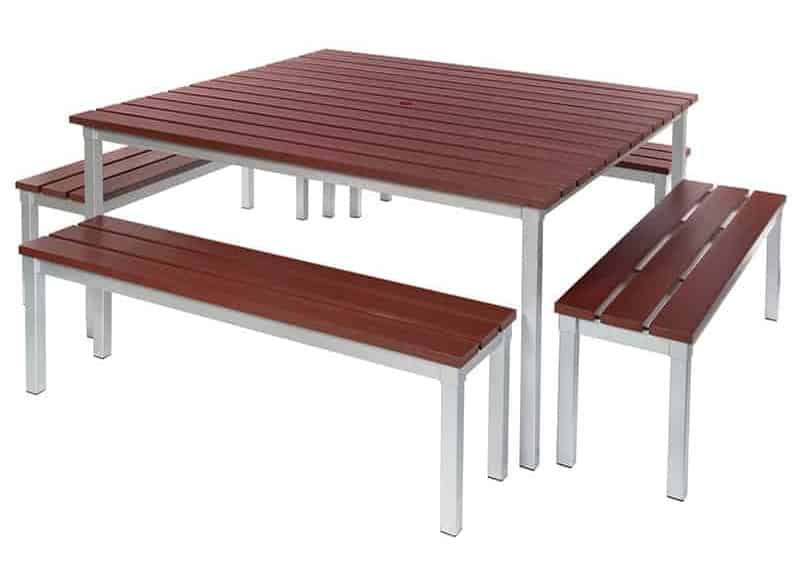
Many a community centre has an outdoor area that sees extensive use throughout the warmer months of the year. If your community centre has a well-used outdoor area, then consider adding the following types of furniture to your shopping list:
- Outdoor tables and benches – if you want some furniture that can be left outdoors all-year-round, then consider buying an outdoor table and bench set. These typically feature robust metal frames and laminate tops. Our Outdoor Laminate Tables & Benches are a great example.
- Picnic benches – should you want a more traditional option, then go for some classic picnic benches. Typically made from solid timber, picnic benches – such as our Hereford & King Picnic Benches – are easy to set up and dismantle (for storage).
Changing rooms
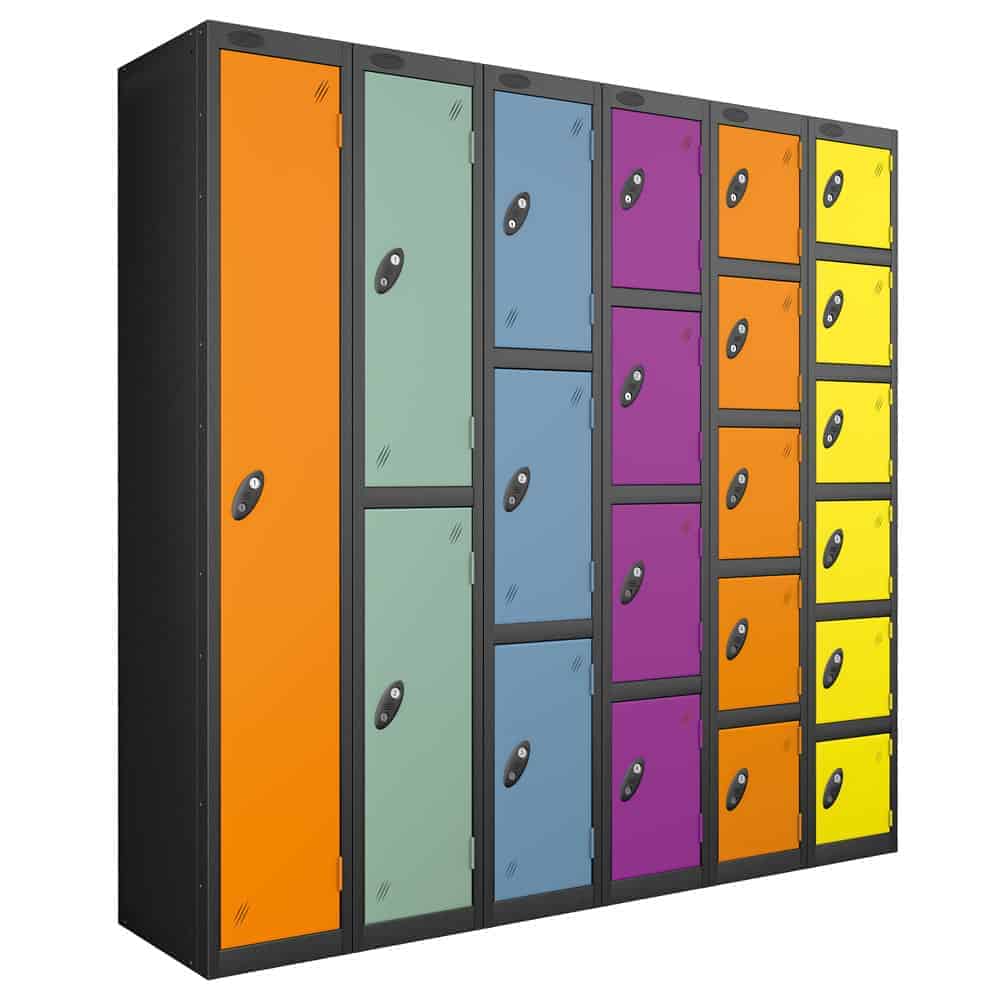
If your community centre or sports club has a set of changing rooms, then it’s important that they’re properly kitted out. Some items of furniture you’ll want to buy for your changing rooms include:
- Lockers – a set of quality steel lockers is a must, providing people with a place to safely and securely store their valuables. We’d recommend our Probe Steel Lockers, which feature an antibacterial coating to help maintain a hygienic environment.
- Changing room benches – provide your visitors with a set of hygienic changing benches. Here at Rosehill, we recommend the Enviro Changing Room Benches, which are practical, water-resistant and easy to keep clean.
Rosehill: number one for community centre furniture
No matter what type of community centre or community asset you run, if you need furniture then Rosehill is the best place to shop online.
For over 40 years we’ve been supporting community centres across the UK to obtain the highest-quality, best-value furniture.
We take pride in offering a truly consultative service, working with you to fully understand exactly what types of furniture will be best for your building and its users.
Plus, because we have long-standing relationships with most of the UK’s contact furniture manufacturers, we are able to offer bulk buying discounts that you just can’t get elsewhere.
Want to discuss a community centre furniture project? Then speak to one of our friendly experts on 0161 485 1717 or at: sales@rosehill.co.uk.
Shop community centre furniture at Rosehill now
For more commercial and contract furniture buying guides, advice and information, read the Rosehill blog…
What Is Contract Furniture? | How to Buy Sustainable Furniture | The Best Multipurpose Plastic Chairs
