


For an increasing number of people, contract furniture not only has to be affordable and well-made – but environmentally friendly. In fact, many procurement officers and building managers have an obligation to check the environmental credentials of a piece of furniture prior to purchase. If you’re in a similar situation then keep reading and the Rosehill team will tell you how to buy sustainable furniture…
What is sustainable furniture?
Before we tell you our top tips for buying an item of eco-friendly furniture, let’s kick things off with a definition; what is sustainable furniture?
Whilst there are differing definitions used across the contract furniture industry, here at Rosehill we define sustainable furniture as being a type of furniture that is designed and manufactured in such a way as to have as little negative impact upon the environment as possible.
Based on this definition, a sustainable item of contract furniture will:
- Be designed to provide maximum longevity, with no ‘planned obsolescence’.
- Be manufactured from materials that come from renewable sources (or recycled materials).
- Not use materials that contain – or are imbued with – polluting or harmful chemicals.
- Be designed to be easily recyclable once it reaches the end of its serviceable life.
It’s important to note that we are talking specifically about sustainable contract furniture – that is, furniture which is explicitly designed for use in public environments such as offices, reception areas, waiting rooms, schools, libraries, community centres etc.
What to look for when buying sustainable contract furniture
Okay, so hopefully now you understand what we mean by the term ‘sustainable contract furniture’. But, how do you go about buying it?! Below, we’ve set out our top tips for identifying and buying the perfect sustainable furniture for your public building.
Can you refurbish your existing furniture?
The first thing you should do is establish whether you actually need new furniture in the first place.
It’s possible to refurbish a wide range of contract furniture; from reupholstering chairs to replacing tabletops, it’s never been easier to breathe new life into your existing items.
Should a piece of furniture be partially broken (e.g. a wooden framed church chair), in some cases a carpenter will be able to remedy it.
If you have an item of furniture and you’re wondering whether it can be refurbished, speak to our team who will be able to advise you.
Look for environmental accreditations/credentials
The easiest way of quickly identifying if an item of furniture is sustainable (or not) is to see if it carries any environmental or sustainability credentials.
An item of furniture that is deemed to be eco-friendly will typically be labelled with an ‘ecolabel’.
Ecolabels first emerged in the 1970s and aim to provide an easy ‘at a glance’ way of identifying sustainable items of furniture. Given the rising eco-consciousness of the period, ecolabels rapidly gained in popularity and today there are 35 main ecolabels used by the furniture industry.
Whilst some of these ecolabels apply to furniture companies as a whole (e.g. the entire company’s operations are ‘green’), other ecolabels relate instead to the materials used in an item of furniture e.g. timber or plastic.
Below, we’ve set out the most common ecolabels to look for on items of contract furniture in the UK.
The FSC label
One of the most common ecolabels you’ll see used on contract furniture in the UK is the FSC label.
Managed by the Forest Stewardship Council (FSC), the FSC label is considered to be the ‘world’s most trusted mark for sustainable forestry’ and ensures that the timber used in an item of furniture meets strict criteria.
In order for timber to be awarded an FSC label, it must:
- Be harvested responsibly in such a way as to avoid deforestation.
- Have been harvested by workers who are paid a fair wage and have good working conditions.
- Have been harvested alongside measures to protect plant and animal species during forestry operations.
By selecting an item of furniture that is FSC certified you can be assured that any wood it contains has been sourced sustainably.
When searching for furniture, it’s important to note that there are in fact three different FSC labels. These are:
- FSC Mix – the furniture is made with a mixture of timbers from FSC-certified forests, recycled materials and/or FSC-controlled wood. The FSC Mix label is considered to be the ‘lightest touch’ of the FSC labels.
- FSC Recycled – with this label, an item of furniture will be made using wood that is 100% recycled.
- FSC 100% – considered to be the most ‘rigorous’ of the FSC labels, an item of furniture with an FSC 100% label will contain wood that is sourced entirely from FSC-certified forests.
SCS Indoor Advantage
If you’re looking at an item of furniture that is made from plastic (or contains plastic components/parts), then check to see if it has the SCS Indoor Advantage label.
SCS Indoor Advantage was developed in response to concerns that certain plastic-based items of furniture can give off what are known as ‘volatile organic compounds’ (VOCs) which can affect indoor air quality.
Voltage organic compounds include compounds such as benzene, ethylene glycol, and formaldehyde. If you are exposed to these compounds over a long enough period, they can have an adverse impact on your health. They also have a negative impact upon the general environment.
So, if you want to buy a truly sustainable and eco-friendly item of plastic contract furniture, ensure it carries the SCS Indoor Advantage Gold ecolabel. With this level of accreditation, an item of furniture will align with many building rating systems including LEED v4, BREEAM and WELL buildings.
Bluesign Approved
When it comes to fabrics, one of the most high-profile ecolabels is ‘Bluesign Approved’.
This ecolabel is awarded to fabric manufacturers that produce textile products under ‘Earth-friendly’ conditions.
In order to become Bluesign Approved, a contract fabric manufacturer will have their entire supply chain audited, with things like chemical usage, water use, and raw materials all being closely scrutinised.
A great example of a Bluesign Approved fabric is Chieftain’s Earthly fabric range. This range of fabrics is made from 100% recycled fibres sourced entirely from waste textiles.
Furniture Industry Sustainability Programme (FISP)
The Furniture Industry Sustainability Programme is an independently certified sustainability programme that is designed to highlight furniture manufacturers that are operating as sustainably as possible.
Since its inception in 2006, the FISP has quickly been recognised by procurement teams, specifiers, architects and other furniture buyers as being the ‘gold standard’ in terms of sustainable furniture manufacturers.
Here at Rosehill, we work with numerous FISP accredited manufacturers including Camira Fabrics, Knightsbridge, KI Europe, ORN and more.
Buy an item of furniture from a FIRP-accredited manufacturer, and you can be assured that you’re getting a piece of furniture that has been designed and manufactured with sustainability at the forefront of mind.
Check the furniture’s materials
Closely related to the above point, you should pay attention to the materials that are used in the design and manufacture of a piece of contract furniture.
Of course, if an item of furniture has an environmental accreditation – then it’s highly likely to be using sustainably sourced materials.
However, it’s important to note that not all furniture manufacturers seek accreditations such as the FSC label – but they still use recycled materials in the construction of their furniture.
With that in mind, you should always check the specification/description of items of furniture. This specification/description will normally detail the range of materials used, as well as the provenance of said materials (e.g. whether they are recycled or drawn from a sustainable, renewable source).
The renewable, versus recyclable versus recycled distinction
At this point, we’d like to expand upon a point which often causes confusion amongst the buyers of contract furniture.
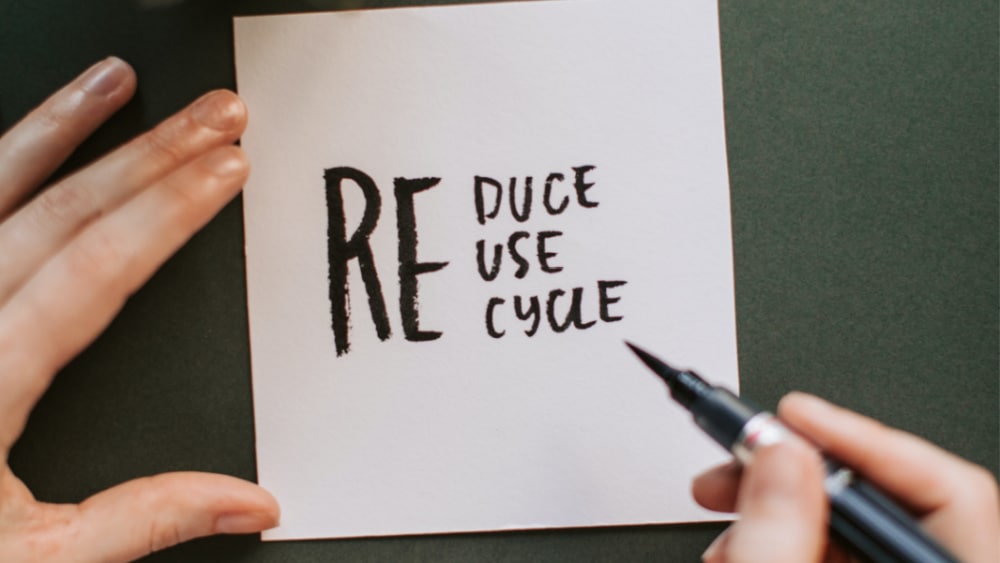
When shopping around for furniture, you are likely to encounter three distinct terms; renewable (or sustainable), recyclable and recycled. Whilst they may seem like terms that can be used interchangeably, they shouldn’t be!
Below, you’ll find the definition of each one:
- Renewable/sustainable – you may sometimes see items of furniture described as using renewably/sustainably sourced materials. This means the item of furniture is using virgin materials – but, these materials have been taken from a renewable/sustainable source (e.g. timber which is taken from a sustainably-managed forest).
- Recyclable – the item of furniture uses fresh, virgin materials, however the materials can be recycled once the furniture has reached the end of its serviceable life.
- Recycled – the item of furniture is manufactured from recycled materials e.g. the materials were previously used in another form and have been repurposed.
Of these three terms – an item of furniture which uses ‘recycled’ materials is the most sustainable. This is because it a) isn’t using virgin materials and thus not contributing to natural resource depletion, and b) it is diverting materials from landfill and therefore contributing to the ‘circular economy’.
To give you an idea of the sustainability credentials of recycled materials, consider that if you buy an item of furniture that contains recycled aluminium, then it will have been produced using 95% less energy than producing aluminium ‘from scratch’.
The types of recycled materials that can be used in items of contract furniture include:
- Reclaimed timber – wood that has been previously used in items of furniture (or other applications).
- Recycled composite wood – composite woods such as plywood can be made from recycled materials.
- Recycled metals – metals such as aluminium are commonly recycled and reused in new items of furniture.
- Recycled upholstery – an increasing number of contract fabrics are being made from 100% post-consumer recycled materials. For example, Camira’s Rivet fabric is made from recycled polyester made from used plastic bottles.
- Recycled polypropylene – more and more chairs are utilising recycled polypropylene (either to construct the chair entirely, or for parts such as the seat or back pads). Recycled polypropylene is particularly environmentally friendly as it reduces the need for new oil-based plastic production.
All of that isn’t to say that recyclable furniture or furniture that uses materials from renewable resources isn’t ‘sustainable’. For example, if you buy an item that’s made from recyclable materials, then the onus is on you to ensure it is recycled at the end of its service life.
Likewise, if you are buying furniture that uses renewable resources, you should check that those claims are true (by looking for an ecolabel etc).
Durability
The next thing to consider when looking for a sustainable item of contract furniture, is its durability.
Think of it this way – if an item of furniture is made from recycled materials, but will only last for a short period of time – then it’s not really sustainable!
In other words, you want to ensure that any contract furniture you buy is designed and manufactured in such a way as to provide a long, trouble-free service life.
The easiest way to do this, is to check what length of guarantee/warranty the furniture comes with.
As a general rule, you can assume that the longer the guarantee, the longer you can expect it to last.

For example, the Postura+ Poly Chair has a lengthy 20-year warranty – and is widely considered to be ‘indestructible’ by contract furniture experts.
Another way of checking if a piece of furniture is durable or not, is to look carefully at the way it’s been fabricated.
For example, a robust, long-lasting wooden-framed chair will generally have mortise and tenon joints – one of the strongest joins you can use on furniture.
Likewise, if you’re buying a metal-framed chair, then check the welds used. Good quality, robust welds include full fillet and/or groove welds.
Finally, if you’re buying a plastic chair, then you’ll generally find that one-piece poly chairs which are injection moulded from a single continuous piece of polypropylene are the strongest.
The same goes for upholstered items of furniture. Ensure that you select contract fabrics that are robust, have a high Martindale Rub Test score and which are designed for the environments in which you’ll be using them.
Local manufacture
Just as people seek to reduce their ‘food miles’ (the number of miles a foodstuff travels from its origin to the plate), you can seek to reduce the ‘furniture miles’ of your contract furniture.
Thus, if you’re particularly concerned about the overall ‘carbon footprint’ of a piece of furniture, then select an item which has been manufactured in the UK.
However, at this point, we need to raise an important caveat.
Given the increasingly globalised world in which we live – and the fact that supply chains now span the planet – it’s actually very difficult to purchase an item of contract furniture which has been wholly made in the UK.
For example, in many instances an item of furniture will be ‘assembled in the UK’, with the raw materials (e.g. the metal, timber, upholstery) being sourced from overseas.
Having said that, many of the manufacturers we work with are UK and Europe based and have strong sustainability policies. If you’re keen to know more about these policies, and the extent to which an item of furniture is assembled/manufactured locally, please contact us.
Note – this isn’t to say that all internationally-sourced furniture is bad. In fact, in many cases, international contract furniture manufacturers are involved in carbon offset schemes in order to negate the carbon footprint associated with the export of their products.
Efficient manufacture
In addition to sourcing your furniture from a local manufacturer, you should also give some thought to the ways in which the furniture has been manufactured.
Is the factory in which the furniture is made run efficiently? Does the manufacturer have policies and processes in place to minimise negative environmental impact? Are the company’s operations carbon-neutral (or do they have goals to that end)?
The answers to these questions and more will influence how sustainable a manufacturing process is.
An increasing number of contract furniture manufacturers are seeking specific accreditations and certifications in order to ‘prove’ how green their manufacturing processes are. Examples of these credentials include:
- ISO 14001:2015 Environmental management systems – a company with this accreditation will have a management system in place that aims to reduce pollution and other negative impacts upon the environment.
- PAS 2060:2014 – this is a standard published by the British Standards Institute (BSI) which helps companies demonstrate their carbon neutrality.
Accreditations like these will help you spot those contract furniture manufacturers that are putting a serious amount of time and money into becoming more sustainable.
Design
An oft overlooked – yet very valid point – when it comes to buying sustainable contract furniture is design.
If you want to buy furniture that’ll last for years, even decades, and thus have a minimal ecological impact, then you should choose items that have a classic, timeless design.
To put it another way, don’t buy items of furniture in styles that will quickly go out of fashion.
That avocado green easy chair may look ‘on point’ now, but will it still look as ‘on trend’ in 10 years?
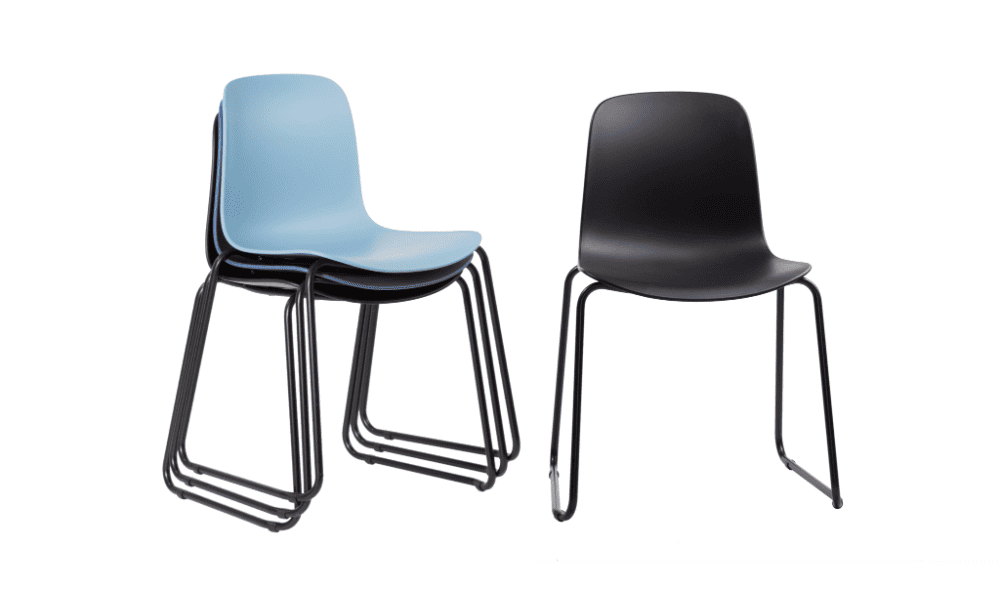
If you’re serious about embracing sustainable purchasing practices, then consider choosing items of furniture that feature classic silhouettes and shapes, and understated, neutral colour schemes.
Here at Rosehill, we work with several contract furniture manufacturers that specialise in creating truly timeless pieces of furniture that’ll look just as contemporary in a decade as they do today.
Packaging
Almost without exception, every item of contract furniture will be supplied and delivered in some form of packaging.
In the majority of cases, this packaging will include:
- Wooden pallets.
- Shrink wrap.
- Banding.
- Cardboard.
- Other cushioning/protective materials.
If you want to ensure you’re buying the most sustainable furniture possible, then check with your chosen manufacturer whether or not their packaging material is recyclable.
You’ll find that more and more contract furniture manufacturers are supplying their furniture in either completely recyclable or reusable packaging materials.
Energy-efficient features
This is only a minor point – but one we’d like to include for the sake of completion.
If you’re buying an item of contract furniture that includes any form of electrical component e.g. a data or power module, downlights etc, then ensure that these electrical components are energy efficient.
For example, if you’re buying an acoustic booth which features lighting, check that the lighting is LED. This can significantly cut down on energy usage associated with that particular item of furniture.
Buy the right item, first time
The most important thing you can do to buy sustainably for your public building, is to ensure you actually buy the right items the first time round.
There’s nothing less sustainable than buying a series of chairs or tables and then having to replace them within a short time period because they’re not suitable for the building or application.
This means you’re best seeking the advice of contract furniture professionals as part of your buying journey.
An experienced contract furniture expert will ask you all kinds of questions – some you probably didn’t expect! – and will be able to help you select only those items that’ll truly work in your building.
Rosehill: helping you buy the correct contract furniture since 1982
For over 40 years Rosehill has been helping people like you buy the perfect furniture for their public building.
We’ve worked with procurement teams, specifiers, architects, caretakers, facilities managers, interior designers and more to select furniture that’s great value, fit-for-purpose and able to meet their sustainability goals.
If you’d like to discuss furniture for your building, our friendly experts will be happy to help! You can speak to us on 0161 485 1717 or at: sales@rosehill.co.uk.
Shop sustainable contract furniture at Rosehill now
For more commercial and contract furniture buying guides, advice and information, read the Rosehill blog…
What’s the Right Way to Dispose of Old Contract Furniture? | What Is Contract Furniture? | When Do I Need to Order Contract Furniture?
